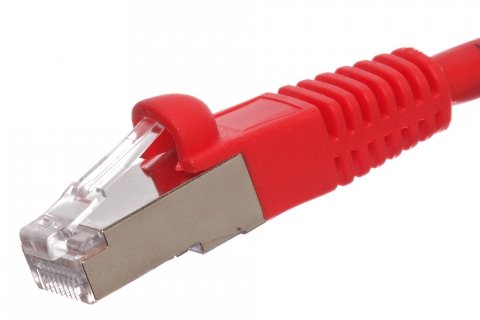

In the world of high-speed data transfer, Shielded RJ45 Cables act as the essential foundation for any stable network. While most people recognize the standard Ethernet plug, few understand the engineering that separates consumer cables from professional shielded solutions.
Today, we push more data through thinner wires than ever before. This includes 4K video and high-wattage Power over Ethernet (PoE). Consequently, choosing between Shielded (STP) and Unshielded (UTP) cabling often marks the difference between a flawless connection and a total system crash.
1. Why Does Your Shielded RJ45 Cable Category Matter?
Technically, RJ45 refers to the 8-pin interface used for Ethernet networking. However, the performance of your Shielded RJ45 Cables depends entirely on the cable category.
- Cat6: This category supports 10Gbps up to 55 meters.
- Cat6a: This is the 2025 industry standard for professional setups. It supports 10Gbps up to 100 meters.
- Cat8: Engineers designed this for data centers. It supports up to 40Gbps over very short distances.

![Cable Matters [Cat8 Certified] 2-Pack 40Gbps Shielded Cat 8 Ethernet Cable - 5ft, 2000Mhz Category 8 Ethernet Cord, Cat8 Cable for Gaming, Black](https://m.media-amazon.com/images/I/41YaYWLgROL.jpg)
2. Comparing Shielded RJ45 Cables vs. Unshielded
To understand the technical breakdown, we must look at how these cables handle interference.
The Role of Unshielded Twisted Pair (UTP)
UTP is the most common Ethernet cable available today. It uses color-coded pairs of wires twisted together to cancel out basic noise. Although it works well for home offices, it remains highly susceptible to external interference.
The Advantages of Shielded RJ45 Cables (STP / S-FTP)
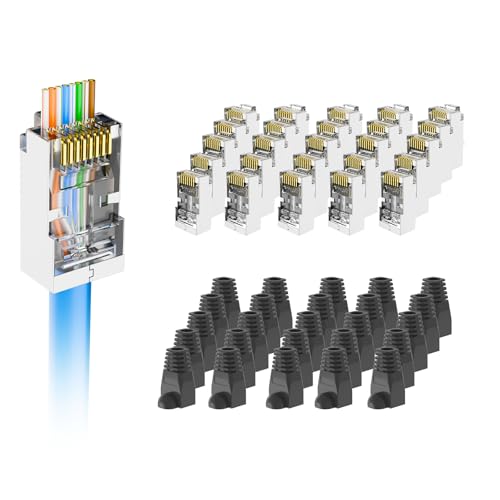
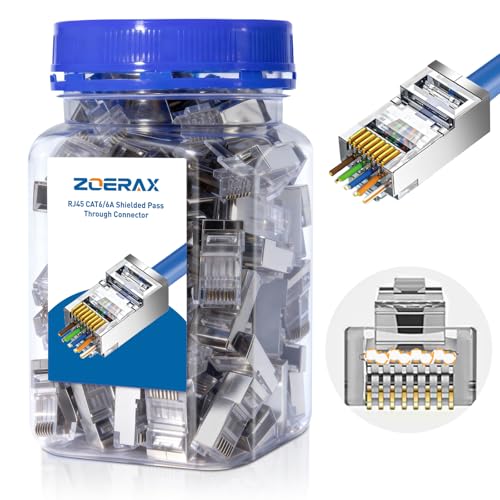
Professional Shielded RJ45 Cables feature an internal layer of foil or braided mesh. This layer acts as a Faraday Cage. Therefore, it reflects and absorbs electrical noise before that noise reaches your data. To work correctly, you must use metal-shielded RJ45 connectors. These connectors ground the signal to your network switch.
3. When Should You Use Shielded RJ45 Cables?
In professional environments, using an unshielded cable is a massive gamble. Therefore, you should switch to high-quality Shielded RJ45 Cables in these three specific scenarios:
Proximity to High-Voltage Lines
If you run Ethernet lines next to power cables or electric motors, the electrical field will “bleed” into your wire. This creates packet loss and lag. Fortunately, shielding prevents these dropped connections.
Power over Ethernet (PoE) Management
When cables power devices like security cameras, the wires generate significant heat. Shielded RJ45 Cables help manage this heat. Simultaneously, they protect the integrity of your data signal.
High-Density Cable Runs
In 2025, technicians often pack dozens of cables into a single conduit. Because of this, unshielded cables suffer from “Alien Crosstalk.” However, using Shielded RJ45 Cables eliminates this interference entirely.
4. Identify Shielded RJ45 Cables Codes for 2025
When you shop for a new installation, look for these codes on the cable jacket. They ensure you get the right level of protection:
- U/UTP: These cables are entirely unshielded.
- F/UTP: This type uses a single foil shield around the whole bundle.
- S/FTP: These are the Best Shielded RJ45 Cables for Pro Use. They feature individual foil shields for each pair plus a braided outer shield.
5. Buy Shielded RJ45 Cables on a Budget
If you are building a network on a budget, do not sacrifice quality. Instead, follow these professional tips:
- Avoid CCA (Copper Clad Aluminum): Many budget cables use aluminum coated in copper. These are brittle and fail under PoE load.
- Choose Pure Bare Copper: Ensure your Shielded RJ45 Cables use 100% copper to maintain high signal speeds.
- Invest in Shielding for Long Runs: If your cable run exceeds 20 meters, buy a shielded (STP) cable. It is a small investment for long-term stability.